


Medical Toxicology
Alyssa Lauture, 35, and her daughter, Andley Lauture, were exiting their trampoline in mid-May when a mother’s nightmare came true - a rattlesnake found the almost 2-year-old girl as she went to pick up her shoe.
Alyssa’s instincts kicked in immediately and she called 911.
“We live in a very rural area, so we all try and be aware of snakes,” she says. “I just knew I needed to get her to the hospital as soon as possible.”
Dispatch encouraged Alyssa to keep Andley as calm as possible to deter the venom from spreading with high adrenaline.
“I was trying to stay calm so I could keep her calm, but she was screaming. And then after a while, she just started to get very lethargic and started to pass out,” Alyssa remembers. By the time the ambulance made it down the mountain from their home in Mountain Center (in the San Jacinto Mountains near State Route 74), to Highway 111 in Palm Desert, Andley began vomiting profusely.
Luckily, the ambulance and Eisenhower’s Emergency Department had already activated Eisenhower Health’s medical toxicology team to ready for their arrival.
“When we walked into the hospital door, they already had a bed waiting for her,” recalls Alyssa.
“They were trying to help her with the vomiting, so they started her IVs and then she got a round of the antivenom,” Alyssa adds.
About three hours later, Andley was transferred to Loma Linda University Medical Center, where she stayed in the intensive care unit for three days. Upon discharge from Loma Linda, Andley’s primary care doctor followed her closely with blood work every two days to monitor how her kidneys had been affected. Her mother is happy to report that two months later, she was on monthly bloodwork.
Around-the-Clock care
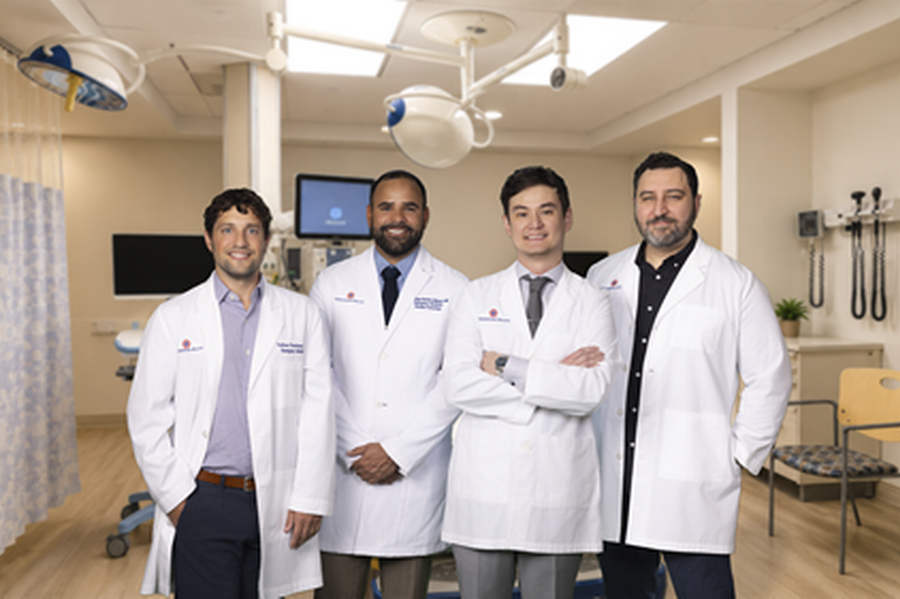
Fully staffed with four full-time medical toxicologists, Eisenhower Health offers the only toxicology program in the Coachella Valley.
“It doesn’t matter what time of day it is, what time of night it is, if it’s the weekend or a weekday, there’s always someone available in the hospital or near the hospital to evaluate, diagnose and treat a poisoned patient,” explains Nathan Friedman, MD, Board Certified in Medical Toxicology and Emergency Medicine, who has watched the program grow in the last three years.
“Toxicology is a branch of medicine that deals with the poisoned patient. That includes everything from chemical exposures to medication mistakes to snake bites and even things like mass casualty incidents from chemical leaks. Having the toxicology program be anchored in the Coachella Valley at Rancho Mirage - right in the middle of the valley - is really useful because we can serve as a base or provide hands-on evaluation of these patients.”
Toxicology goes beyond the services that a poison center would provide and fills a need locally. “For the diagnosis and treatment of things like medication mistakes and overdoses or exposures, it’s really helpful to have someone who can be hands-on at the bedside,” explains Dr. Friedman. “That’s the piece that’s missing from places that don’t have a toxicology program.”
Super sleuths
“A lot of our job in both the hospital and the outpatient setting is a little bit of detective work,” says Dr. Friedman.
Medical toxicologist training includes a deep knowledge in pharmacology, which physicians don’t typically get as part of their regular medical training. That training allows the toxicologist to investigate a patient with vague symptoms or lab work that doesn’’t make sense.
“We have the ability to really take the time and dive into things like rare medication interactions or rare medication side effects,” says Dr. Friedman. “We recently started offering a pharmacogenomics testing service, which looks for individual genetic differences in how people metabolize certain drugs. That has impact for people not tolerating medications that they theoretically should be able to tolerate. It helps us figure out drug-drug interactions.”
“The goal is to get people who are not doing so well from some sort of drug-related problem, whether that’s an adverse drug effect or two drugs that are not playing nicely together in the sandbox. We try to work toward simplifying regimens, making sure that we’re both addressing the underlying disease that the medication was for in the first place, and getting the patient to a place where they’’re feeling good again.”
Michele Elliston, an Indio resident, was referred to toxicology because of her complicated treatment for chronic fatigue syndrome, or myalgic encephalomyelitis. Elliston sat down with Dr. Friedman with her extensive list of medications and it was a relief to hear that her medications would not cause additional symptoms from their interactions.
“I felt really heard and understood,” she recalls. “He was really professional and also extremely personal - great personality and great bedside manner. The information that I got from him relieved my mind about all these medications I’m taking on an everyday basis. And my biggest concern was some sort of interaction between these medications.”
Sleuthing into the pharmacology of patient care and each piece of the overall treatment plan by medical toxicologists begins with a conversation with a primary care physician.
“If you’re on a lot of different medications and you’re worried that either there’s too many of them or that part of the reason that you’re not feeling yourself is due to some of these medications, this is a good question to ask your primary care doctor to see if a referral to toxicology is a good idea,” says Dr. Friedman.
“We can spend some time doing what we call a medication reconciliation and look a little bit under the hood to see if there are things that may need to be pared back, or if you have some undiagnosed issue with metabolizing some of these drugs, because with a lot of these medications, one size does not fit all.”
For more information on Eisenhower Primary Care,
visit EisenhowerHealth.org/PrimaryCare or call 760.773.1460.


