


An Amulet for Better Health
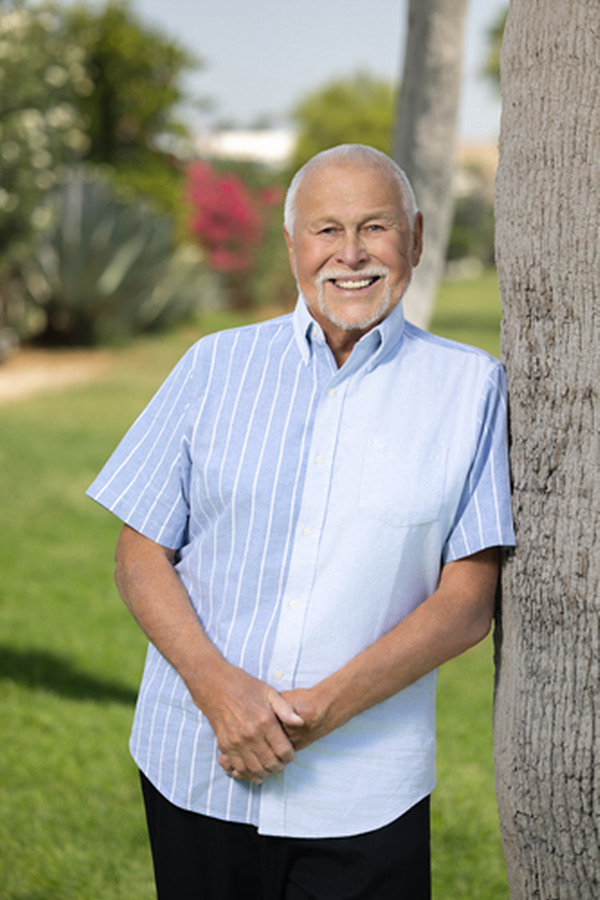
So when faced with his most recent health challenge - the very real possibility of a stroke - he didn’t flinch. The 83-year-old former school teacher and superintendent is a profound optimist and has great confidence in Eisenhower Health.
Although Holmgren and his wife live in Tacoma, WA, they spend four to five months each year in Desert Hot Springs, and have come to rely on the valley’s only nonprofit health system for their care.
“We use Eisenhower for probably 99 percent of all our health services,” says Holmgren. “It’s been nothing but excellent. I even love their hospital food.”
Like millions of people, Holmgren has atrial fibrillation (AFib), an irregular heartbeat that can lead to stroke, blood clots, heart failure and other heart-related complications. He also has high blood pressure and diabetes, which can increase the likelihood of stroke.
To reduce the risk of stroke and blood clots, Holmgren’s cardiologist, Philip Patel, MD, Board Certified in Cardiovascular Disease and President of Desert Cardiology Consultants, prescribed Eliquis®, a blood thinner. One of its possible side effects, however, is internal bleeding, a major concern with Holmgren, who bruises easily and has fallen many times in the past few years because he has difficulty walking.
Minimally invasive, maximally protective
A procedure for a WATCHMAN Implant was considered, but was not suitable for Holmgren due to the size and shape of his left atrial appendage, a small pouch that extends from the upper left chamber of the heart.
Good news: images revealed that Holmgren was a candidate for a similar device called the Amplatzer Amulet, named after the late Kurt Amplatz, MD, an Austrian-born radiologist and inventor of medical devices. Like the WATCHMAN, this catheter-based implant is for patients who have a high risk of stroke, can’t safely take blood thinners long term due to bleeding risk, and have non-valvular AFib.
Non-valvular AFib is atrial fibrillation that occurs in the absence of significant heart valve disease or a mechanical heart valve.
Dr. Patel referred Holmgren to Leon Feldman, MD, FACC, Board Certified in Cardiovascular Disease and Co-Director, Electrophysiology, Eisenhower Health. Dr. Feldman treats people with all aspects of cardiovascular disease but has special training and interest in cardiac arrhythmias and electrophysiology, which is the heart’s electrical system and controls heartbeat.
Dr. Feldman, who has completed more than 125 Amulet procedures since December 2025, performed it on Holmgren. The procedure is minimally invasive and involves inserting a thin, flexible tube through a vein in the groin and guiding it to the heart.
A self-expanding mesh device is then used to seal off the left atrial appendage, which is where most stroke-causing clots form in people with non-valvular AFib. Once it’s sealed off, clots can’t form there and escape into the bloodstream.
Quick, routine and ‘pretty wonderful’

“Eisenhower’s left atrial appendage occlusion program includes both the Amulet and WATCHMAN for stroke prevention,” he adds. “Each procedure can often be done at the same time as an ablation,” a different minimally invasive treatment used to correct abnormal heart rhythms.
“Adding an Amulet or WATCHMAN implant to an atrial fibrillation ablation takes about an additional 15 to 30 minutes,” says Dr. Feldman. “When a patient leaves the hospital, they’’re on the road to treating AFib and also being off blood thinners.”
Patients previously had to travel out of the area to have both treatments done at the same time, also called a concomitant procedure. With Eisenhower’s top-level cardiac care, they no longer have to do that.
“Eisenhower has an incredibly dedicated group of cardiologists, none of whom have ever left after joining the group. That’s basically unheard of,” says Dr. Feldman. “We’re doing leading-edge work related to structural heart disease, especially in the last five years. The Amulet procedure, heart valve replacement and valve repair are examples of the advanced treatments we offer.”
Places to go, dragons to slay
What if the Amulet didn’t exist, or if Holmgren hadn’t undergone the procedure? According to Dr. Feldman, he would’ve had ongoing, significant risk of internal bleeding and stroke, and may have been referred for thoracoscopic surgery, “which has a far longer healing discomfort recovery phase than the Amulet.”
Holmgren will soon return to Eisenhower for a standard post-operative check on his Amulet. He says, “I have places to go, things to do, dragons to slay - and have every confidence in the world in what Dr. Feldman did.
“Someone from Eisenhower called me the day after the procedure to see how I was doing. In my 83 years of experience on this green jumping spherical earth, that’s kind of rare. I believe I’m still present on this planet, in part, because of the many things Eisenhower Health has done for me.”
To learn more about the services at Eisenhower Desert Cardiology Center, visit EisenhowerHealth.org/DesertCard.


