


Kickin' It Country Style
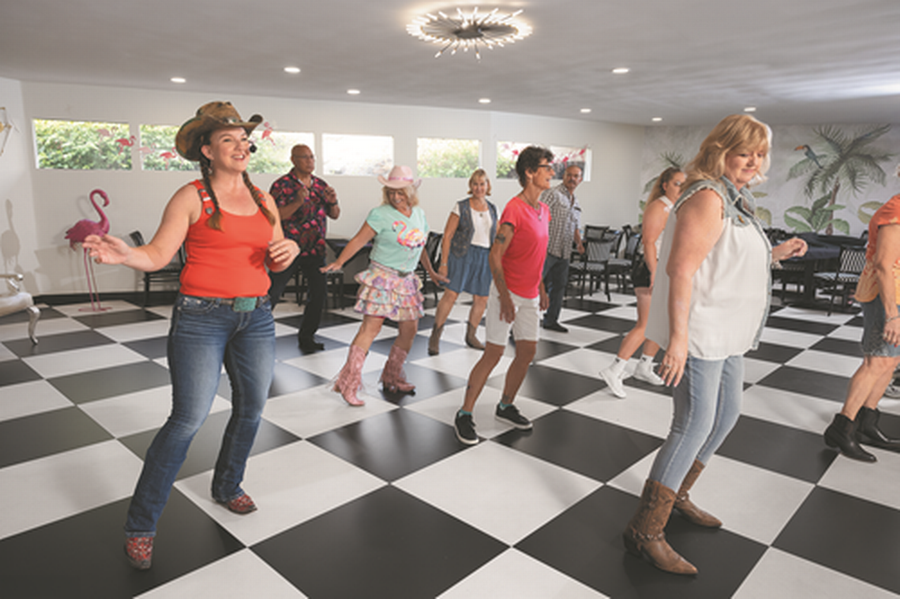
IF THE WORDS SHUFFLE, grapevine and four walls don’t bring imagery of a roarin’ good time on a western dance floor, you’re not alone. Maybe the Wobble, Cha Cha Slide, Macarena and even the Boot Scootin’ Boogie evoke an innate response to jump up and join the crowd. For many country line dancers around Coachella Valley, it’s a dedicated passion not only to learn the lingo but also head to local venues for a chance to kick up their heels and shuffle their way through an evening that challenges the body and mind - all while making new friends along the way.
Attendees at the world-famous Stagecoach festival at the Empire Polo Club in Indio each April enjoy an opportunity for nonstop toe-tapping country music and a venue for those devoted to line and partner dancing. But what about the rest of the year?
Locally, the opportunities to dig your heels into choreography and practice beforehand abound - from classes at dance studios and recreation centers to country-themed nights at casinos and restaurants.
Not sure how to get started? It’s a common concern according to longtime dancer and instructor Jennie McJilton.
“None of us woke up and said, ‘Hey, I know how to dance,’” jokes McJilton. “It’s a matter of getting up there and following the feet in front of you.” McJilton studied some tap dance and ballet as a child. She moved to the Coachella Valley in the late ’80s, and her mom brought her to family country line dance nights locally in the ’90s to, “keep me out of trouble.” Life events put dancing on the back burner but when she was ready, she returned to the dance floor.
That return led McJilton to meeting her now husband - not a dancer - who enjoyed watching the dancers on occasion at one of her regular venues. Another life event - COVID-19 - slowed her down again .
“COVID hit and then I went from dancing every night to not dancing at all and I was really kind of depressed,” says McJilton. “So, we started doing Zoom classes.”
Shortly thereafter, her online foray turned into in-person, safe-distance dancing in a friend’s garage or backyard dance floor, and McJilton tried her hand at teaching dances. She traveled twice weekly out of town to attend classes by a revered dance instructor. She’s now been teaching consistently for the last two years, locally and outside the Coachella Valley.
McJilton encourages anyone who is interested to take the literal first step and get out to a country night or take advantage of a free lesson beforehand.
“I started with two left feet and I just kept at it,” she says. “Once you get on the floor and you feel that energy from everybody else, you want more of that energy. And it’s a healthy addiction. It’s a healthy movement.”
“I’ve been at it for years, but I’m still learning new dances,” she adds. “I can’t learn anything sitting on a chair watching everybody else dance. I’ve got to get up and move.”
Research shows that participating in social dance is not only beneficial physically, but mentally as well.
The University of Sydney references a study published in the journal Sports Medicine in an article that states: “The study found that undertaking structured dance of any genre is generally equal to and occasionally more effective than other types of physical activity interventions for improving a range of psychological and cognitive outcomes including emotional well-being, depression, motivation, social cognition, and some aspects of memory.”
Further, the article references, “Learning dance sequences may challenge cognition, partnered or group dance may benefit social interactions, and the artistic aspect may improve psychological well-being.”
McJilton not only enjoys the physical and mental benefits, but the social ones as well. She and fellow dancers take part in local dance festivals - multi-day conferences that include lessons and social dance evenings - at Palm Springs Winter Break and Palm Springs Line Dance Madness.
For those that may be worried about their stamina or health concerns, she is ready to address their needs.
“I do modify dances because a lot of the older population, they can’t do the hops,” she explains. “Some [dances] have a lot of turns and you don’t have to do a turn. You can do a simple rocking chair, which is just a forward and back [rocking motion].”
“You can do simple movements and get the same count, the same movement, enjoy the same dance without having to keep up with the younger kids that are maybe going to the floor and doing all the turns. All you’ve got to know is what’s the next wall you’re going to and then get there, however you’re going to get there.”
Always speak with your physician when beginning a new physical activity to ensure it’s right for you.


