


One Man's Journey

“Not panicking, I decided to see if my next PSA test would turn out better,” he continues, “but the numbers got worse.”
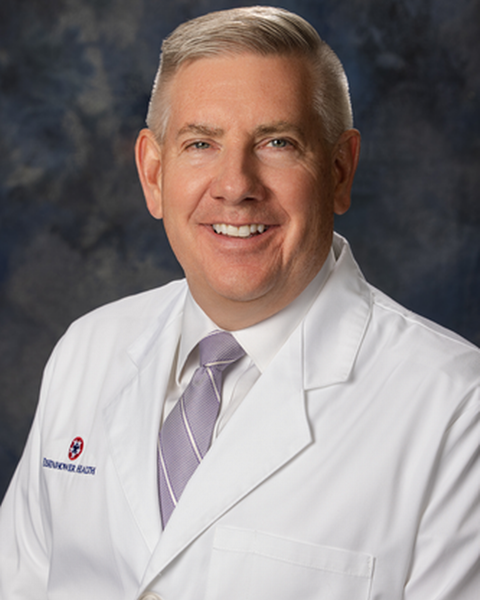
In April 2024, Russell Hisscock, DO, an Eisenhower Primary Care 365 physician, referred Cashman to a specialist. That specialist was Jay Bishoff, MD, a Board Certified Urologist at Eisenhower Health specializing in endourology (a subspecialty in urology that uses minimally invasive techniques) and robotic and reconstructive surgery.
“Years ago, we would have gone directly to a surgical biopsy of the prostate when a patient’s PSA was elevated,” Dr. Bishoff relates. “But today, we do an MRI of the prostate first. This is important for several reasons.”
Chief among them, he explains, is that it eliminates the need for a biopsy in the 30% of men who can have an abnormal PSA level for reasons other than prostate cancer. These include benign prostatic hyperplasia (BPH, also known as an enlarged prostate), a urinary tract infection, prostatitis (inflammation of the prostate gland), a recent groin injury or surgery, high levels of parathyroid hormone (a naturally occurring hormone that regulates blood calcium levels), certain types of exercise, recent ejaculation (after which PSA levels can remain elevated for up to 24 hours) or simply older age.
“If the MRI reveals suspicious areas in the prostate, we have the radiologist do a three-dimensional reconstruction of the prostate, including any areas of concern,” Dr. Bishoff says. “Using sophisticated software, we can ‘fuse’ these 3D images with live ultrasound images of the prostate.
“This smart technology has been a quantum leap in our ability to help men,” he continues. “Before, we’d biopsy a dozen random areas of the prostate, which could miss significant cancers hiding in other places.”
In Cashman’s case, the imaging revealed two areas that were suspicious for prostate cancer, indicating that a biopsy was now in order. The biopsy confirmed prostate cancer in both areas.
“My diagnosis was Stage 2 prostate cancer with a Gleason score of 3+4,” he relates. “It was shocking to hear I had cancer, but the good news was that it hadn’t spread to my bones or lymph nodes.”
The Gleason score - a system used to grade the aggressiveness of prostate cancer - provided more information about the nature of Cashman’s disease. Each cancer sample is assigned a grade from 1 to 5 based on how abnormal the cells look under a microscope and how likely they are to advance and spread. The two most common grades are added together to create the Gleason score. That score is then used to determine the grade group, which also ranges from 1 to 5.
Cashman’s Gleason score of 7 (3+4) corresponded to grade group 2, which is considered a low-risk cancer.
With this information in hand, Dr. Bishoff then sat down with Cashman and his wife, Bonnie, to discuss treatment. He explained that radiation therapy and surgery were both good options at this point. So was active surveillance.
Active surveillance is an approach in which men with low-risk prostate cancer - like Cashman - are closely monitored instead of receiving immediate treatment. Through regular follow-up testing, it aims to detect any changes in the cancer and intervene early, if necessary. In men with slow-growing cancers, this approach can avoid unnecessary surgery or radiation therapy and preserve quality of life by minimizing treatment side effects. According to Dr. Bishoff, active surveillance is an appropriate strategy for approximately 30% of men with prostate cancer.
“Some men freak out when they’re diagnosed and want [the cancer] removed immediately,” Cashman says. “But I told Dr. Bishoff I was willing to live with it if my long-term life expectancy was not shortened.”
“We initially watched Mr. Cashman’s cancer for a year, then repeated the MRI and biopsy,” Dr. Bishoff says. “On his repeat tests, we found that his cancer hadn’t progressed in volume - it was still within the window of being completely contained and curable - but it had increased in aggressiveness, moving from grade group 2 to 3. That represented a 100-fold increase in aggressiveness.”
“After carefully discussing all the treatment options, we decided without hesitation that surgery to remove my prostate was best for me at this point,” Cashman says. The operation that Dr. Bishoff would perform was a single-port, robotic-assisted radical prostatectomy, in which a solitary incision is made in the lower abdomen to insert all the robotic tools. It was scheduled for August 7, 2025.
“There was no doubt in my mind the surgery would remove the cancer successfully, but I was still apprehensive about the quality-of-life issues of urinary incontinence and erectile dysfunction,” says Cashman.
Nationally, the incidence of post-surgical urinary incontinence ranges from 5 to 35%. Dr. Bishoff, who has used a sophisticated system to track his patients’ outcomes, can document a success rate of 95%, meaning that the vast majority of his patients regain normal urinary control in the weeks or months following surgery. Cashman was reassured.
What about the risk of erectile dysfunction?
“When men ask if they’re likely to have difficulty with erections after their prostate is removed, I tell them that if they were good and strong before surgery, they tend to remain that way if there’s no nerve damage,” he says, referring to the nerve bundles on either side of the prostate that are necessary for an erection.
“Some men have cancer that’s growing into the nerve bundles, so we usually can’t save the bundle on the side with cancer,” he points out, noting that this was not the case in Cashman’s situation. He also stresses that if there is nerve damage, there are oral medications, injectables, vacuum pumps, and penile implants that can enable men to still have an erection.
“As prostate surgeons, we walk a fine line - literally millimeters - between curing a man of his cancer while not destroying his quality of life by leaving him with incontinence or erectile dysfunction,” Dr. Bishoff says. “With other cancers, like kidney or bladder, we don’t have the same functional concerns. When we’re able to cure the cancer and preserve continence and erections, we call it the trifecta.”
Achieving this “trifecta” has been enhanced by robotic-assisted surgery.
“With the robot, we have 15 times magnification over the naked eye, the instruments can go under the pubic bone, and we can introduce gas into the abdomen or pelvis to create working space, which acts to tamponade [put pressure on] small vessels that used to bleed,” he explains.
What’s more, a robotic-assisted radical prostatectomy is an outpatient procedure and patients can go home the same day.
In mid-September - a month postop - Cashman was doing extremely well and his pathology results pronounced him cancer-free.
“I am hopeful and optimistic that everything will be fine and life will be back to normal,” he says. “I’m so incredibly grateful to the Eisenhower team - and my wife - for helping me through this experience.”
He also urges other men: “Please have an annual physical and check your PSA with your blood work. If it’s elevated, don’t panic as there are many factors and issues to consider.”
Dr. Bishoff agrees.
“Get a PSA test every year,” he says. “Don’t ignore the slow onset of urinary symptoms such as more frequent nighttime urination, a weaker or more dribbly urine stream, or more frequent need to urinate between holes of golf - something that often brings men in to see their doctor here in the desert!”
“It’s important to understand that treatment for prostate cancer has completely changed over the past 30 years,” he adds. “The new techniques we have for surgery and radiation therapy minimize any detrimental effects from treatment and can preserve vital physiologic functions - and prevent this disease from shortening men’s lives.”
For more information about prostate cancer screening,
visit EisenhowerHealth.org/Urology or call 760.346.8555.


