


Knowledge is Power

“I was very angry and became obsessed with figuring out why he died,” says the 75-year-old Palm Desert resident. “I kept reading everything I could and, in the process, learned how the signs of a heart attack can be different in men and women.”
That knowledge likely saved her life when, less than a year after her husband succumbed to his heart attack, she had one herself.
“It was December 10, 2023, a beautiful Sunday afternoon, and I decided to go in the pool,” she recalls. “I wasn’t feeling too well and as I took two steps down into the water, something came over me and told me to get back in the house.” Once inside, she became severely nauseated and began to throw up violently - symptoms she had learned could signal a heart attack in a woman. Then she felt chest pain.
“I called 911 and got on the floor,” Cosentino Hayes continues. “That’s where the paramedics found me, just six feet from the back door.”
They rushed her to Eisenhower Health, where she was diagnosed with an ST-segment elevation myocardial infarction (STEMI), a type of heart attack caused by a severe blockage of a coronary artery that supplies blood to the heart. In fact, Cosentino Hayes’ left anterior descending (LAD) coronary artery was 99% blocked.
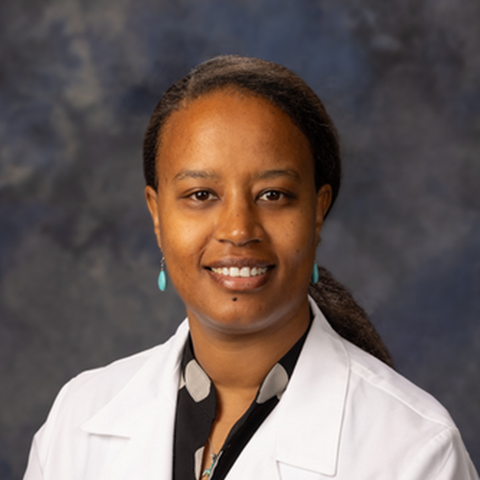
“She came into the emergency room with a pretty big heart attack,” says Board Certified Cardiologist Ehete Bahiru, MD, who was on call that day. “Like her husband, Mrs. Cosentino Hayes had experienced no cardiac problems before this. But it’s not uncommon to present with a heart attack as the first symptom of heart disease, particularly coronary artery disease.”
What’s more, Cosentino Hayes had risk factors for coronary artery disease, including high cholesterol. Plus, since her husband’s death, she’d been experiencing significant emotional distress, which can greatly contribute to the risk of a heart attack, Dr. Bahiru notes. “The psychological toll of having a heart attack - either your own or that of a loved one - cannot be dismissed,” she says.
To treat Cosentino Hayes’ coronary artery blockage, Eisenhower’s interventional cardiology team quickly performed what’s called a percutaneous coronary intervention (PCI). This is a minimally invasive nonsurgical procedure in which a stent - a wire-mesh tube - is inserted via catheter into a narrowed coronary artery to prop it open and restore blood flow to the heart.
Outpatient cardiopulmonary rehabilitation at the Renker Wellness Center on Eisenhower’s main campus in Rancho Mirage is a comprehensive program of supervised exercise, education, lifestyle counseling, and ongoing monitoring designed to improve physical fitness and reduce the risk of future cardiac events.
“I’m not a joiner, but this program has really gotten me through the past couple of years,” Cosentino Hayes says, who started attending three sessions a week and still goes once a week.
“The people couldn’t be lovelier, and the lessons you learn about diet, exercise, stress relief - they really sink in.” She has regained all her heart muscle function and she says, simply, “I feel good.”
“Cardiac rehabilitation is key to a good recovery,” Dr. Bahiru affirms. “Some people may be afraid to push themselves physically after a heart attack, but they feel safe in this controlled and monitored environment. And, it’s an opportunity to connect with other people who also have gone through it.”
Dr. Bahiru also stresses the importance of preventing a heart attack in the first place. “While we can take care of heart attacks so much better than two or three decades ago, the cornerstone of optimizing heart health is prevention,” she says.
She points to equally impressive advances that have been made in this regard, including sophisticated testing to identify an individual’s risk factors and strategies such as medications and lifestyle changes that are proven to modify these risks - long before any symptoms arise.
And as Cosentino Hayes’ experience underscores, another vital component of optimizing heart health is education.
“Intellectually, I think I’ve always known that more women died of heart disease than all types of cancer combined, but it took reading about the symptoms of a heart attack in women to help me realize that what I was experiencing wasn’t just a bad case of the flu or food poisoning,” she says. “If my husband hadn’t died of a heart attack, and if I hadn’t read all that I did to learn about it, I’m honestly not sure I would have called 911 that day.”
To learn more about the services at Eisenhower Desert Cardiology Center,
visit EisenhowerHealth.org/DesertCard.


