


A VITAL AFFILIATION FOR CANCER CARE - Eisenhower and UC San Diego Health Cancer Network
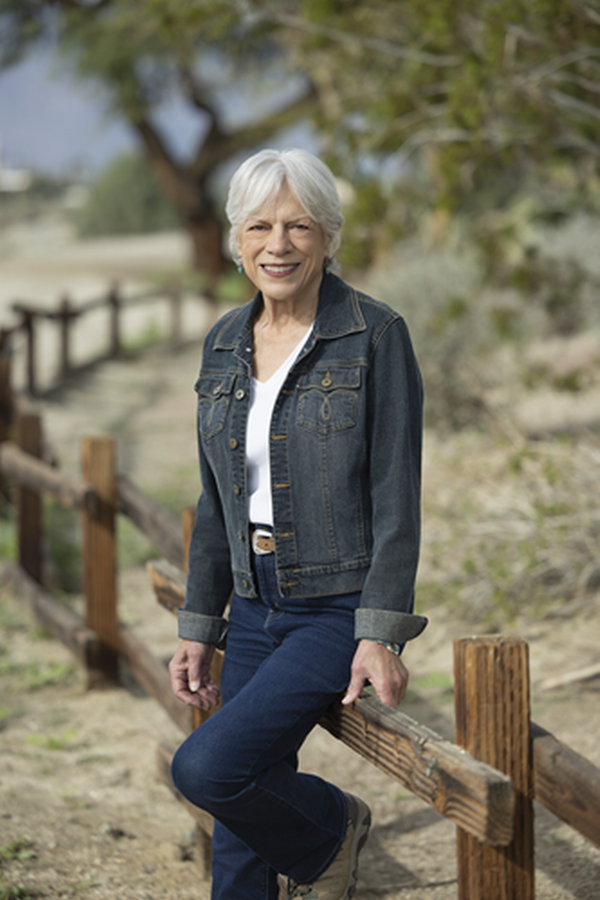
up for a local summer concert, she asked her friend, “Do I look yellow?” Her friend looked closely and replied, “Oh, my god - your eyes are bright yellow. You need to see a doctor.”
Bonney went to urgent care and was immediately sent to Eisenhower Health, where imaging tests revealed she had a blocked bile duct. She was admitted and that evening, Board Certified Gastroenterologist Vikram Kanagala, MD, performed an endoscopy and placed a stent to enable the bile to drain.
But the fix wasn’t that simple.
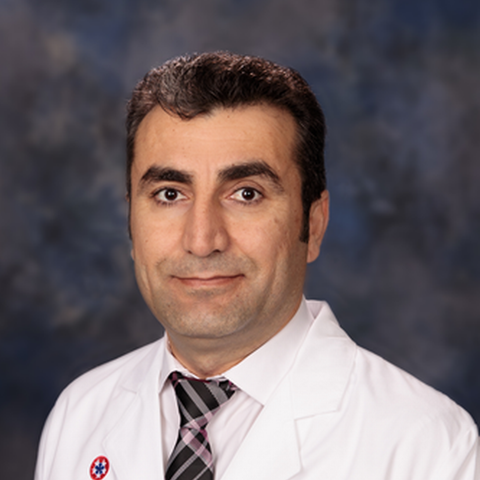
The next morning, Board Certified Medical Oncologist and Hematologist Delshad Ahmad, MD, visited Bonney in her hospital room. When she saw “Oncology” stitched on his white coat, she blurted out, “Oh, I don’t want to see you.”
He explained that Bonney’s blockage was due to a tumor in her pancreas. And while pancreatic cancer is one of the most challenging types of cancer to treat, Bonney had three important factors in her favor. First, except for the cancer, at age 75 Bonney was in overall good health and enjoyed an excellent quality of life - something that treatment could extend.
Second, her tumor was located in the head of the pancreas and had not metastasized (spread), making her potentially eligible for what’s called the Whipple procedure. The Whipple (or pancreatoduo-denectomy) is the most common surgery for pancreatic cancer. It is a highly complex operation in which the surgeon removes the head of the pancreas, the gallbladder, the duodenum (a part of the small intestine), a portion of the stomach and surrounding lymph nodes, then reconnects the remaining pancreas and digestive organs. Due to its complexity, the operation can take as long as 12 hours.
Third, through Eisenhower Health’s affiliation with UC San Diego Health Cancer Network, Bonney had streamlined access to a team of surgical oncologists at the Moores Cancer Center at UC San Diego Health who perform more pancreatic cancer surgeries than any medical center in the region. This affiliation, in place since 2018, integrates world-renowned cancer expertise at UC San Diego Health - including advanced surgical proficiency and extensive clinical trials - with Eisenhower’s closer-to-home treatments, including chemotherapy, radiation therapy, personalized medicine, and supportive services.
Dr. Ahmad referred Bonney to Bryan Clary, MD, FACS, surgeon- in-chief, chair and professor of surgery at UC San Diego Health.
He has performed more than 400 Whipple procedures during his 25-year career.
“Dr. Clary was the nicest guy in the world,” Bonney relates. “He sat down and explained my treatment choices and how the Whipple was the best option for any longevity.”
But surgery would have to wait for a few months.
“For the majority of patients with pancreatic cancer, we recommend neoadjuvant chemotherapy,” Dr. Clary says. Neoadjuvant refers to chemotherapy given before surgery to shrink the tumor, helping to make it more operable and starting to fight cancer throughout the body right away. In addition, adjuvant chemotherapy is given after surgery to eliminate any lingering cancer cells too small to detect, reducing the risk of the cancer returning.
Bonney underwent chemotherapy at the Eisenhower Lucy
Curci Cancer Center. For four months prior to surgery, she received once-weekly infusions for three weeks, followed by a week off. Then, on February 26, 2024, Dr. Clary performed a Whipple procedure at UC San Diego Health. It was a nine-hour operation.
While the typical hospital stay after a Whipple procedure is one to two weeks, Bonney required a longer recovery due to a known operative complication in which the new connection between her stomach to her small intestine did not empty as expected. To address this, her care team moved quickly to intervene. A surgical revision, including placement of a gastrostomy tube, was performed by Andrew Lowy, MD, FACS, Chief, Division of Surgical Oncology, UC San Diego Health.
“Nationally, the overall complication rate for the Whipple generally exceeds 50 percent,” Dr. Clary explains, noting that these can range from relatively minor issues, such as a bladder infection from a catheter, to more complex challenges that may extend a patient’s hospital stay.
“What matters most is how those complications are managed. The mortality rate at UC San Diego Health and other high-volume centers is typically 1 to 2 percent, compared with closer to 10 percent nationwide, reflecting the depth of experience and coordinated surgical expertise available to our patients.”
Six weeks after her discharge, Bonney resumed her chemotherapy regimen for two more months (“I lost my hair for a second time!” she says). Then she began her recovery in earnest.
“Treatment took a lot out of me; it was a long while before I could even walk my dog again,” she says. But week-by-week, she grew stronger and began resuming her regular activities. The retired bookkeeper is passionate about gardening and enjoys hiking the mountains around Idyllwild with her border collie, Augie.
Because pancreatic cancer has a high-recurrence rate, Bonney is closely monitored, undergoing imaging and blood tests every three months at Eisenhower. Thanks to this regular surveillance, Dr. Ahmad detected a potentially life-threatening liver infection months after her surgery.
“The coordination and communication between everyone on my care team - both at Eisenhower and UC San Diego Health - have been seamless,” Bonney says.
“It’s very important for cancer patients to have multidisciplinary engagement since their care requires multiple types of treatment,” Dr. Clary adds. “Coordination is vital to ensure each patient is getting the right treatment in the right sequence. The collaboration between specialties at UC San Diego Health and Eisenhower makes this coordination easier.”
And it has a tremendous impact on patients’ lives.
As of December 2025, Bonney remains cancer free.
“I’m doing great,” she says. “I have a lot of energy, I’m looking forward to another Christmas with my family, and I don’t feel like anything’s wrong.”
“It’s good to be alive,” she adds.
For more information about Eisenhower Health cancer services, call 760.674.3602 or
visit EisenhowerHealth.org/Cancer.


