


Upcoming Events
- Provider Referral
Need assistance finding a doctor or other provider? Call 760-568-1234.Bariatric Surgery Information
TU, Jun 18, 8:15 to 9:30 a.m.
Jorge A. Almodovar, MD, Board Certified in General Surgery
Visit EisenhowerHealth.org/Calendar
to register, or call 760-834-3796. Read MorePrevention and Treatment of Common Foot Problems
TU, Jun 18, 4:30 to 5:30 p.m.
Adam Rife, DPM, Board Certified in Podiatry
Visit EisenhowerHealth.org/Calendar to register online. Read MoreRotator Cuff Tears and Management
TH, Jun 20, 4:30 to 5:30 p.m.
Patrick St. Pierre, MD, Board Certified in Orthopedic Surgery
Visit EisenhowerHealth.org/Calendar to register online. Read MoreBariatric Surgery Information
W, Jun 26, 5:30 to 6:30 p.m.
Bobby Bhasker-Rao, MD, Board Certified in General Surgery
Visit EisenhowerHealth.org/Calendar
to register online, or call 760-834-3796. Read MoreTriage Cancer: Caregiving
W, May 29, 11 a.m. to 12:30 p.m.
Amanda Goodstadt, Esq., Staff Attorney, Triage Cancer
Visit EisenhowerHealth.org/Calendar to register online, or call 760-834-3798 Read More
Eisenhower Health System Patient Privacy Code
 Implementation: July 1, 2024
With the rise in scam technology and complexity, Eisenhower Health is taking extra precautions to protect patient medical information with the implementation of a four-digit privacy code.
Beginning July 1, anyone requesting medical information over the phone will be required to provide a privacy code - including the patient themselves, parents of children, family, friends, or a designated representative. It is also required when medical information is being requested in-person and the patient is unavailable.
Getting started
In June, all Eisenhower Health patients that use MyChart (electronic medical record) will receive a notice via MyChart with their individual privacy code. Eisenhower Health patients that do NOT use MyChart will receive a letter with their privacy code. Codes may be changed, if desired, starting July 1. If the patient, the parent of a child (patient), or Medical Durable Power of Attorney for the patient has forgotten their privacy code, the Health Information Management department will take steps to verify identity and provide the code. If an individual other than those listed above has forgotten the patient's code, they will be asked to contact the patient for the code. They will not be provided any medical information without the privacy code.Significant Advances in Treating Breast Cancer
3D mammography, expanded care resources and more
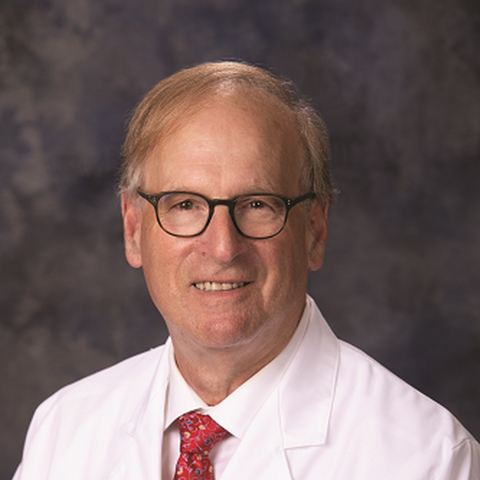
“Big changes have come about in the detection, diagnosis and treatment of breast cancer in the past decade,” says Paul Sylvan, MD, Medical Director of Eisenhower Lucy Curci Cancer Center’s three Breast Center locations. Board Certified in Internal Medicine and Radiology, Dr. Sylvan specializes in breast imaging.
Importantly, the Breast Center is on the leading edge of these changes, giving desert patients convenient, close-to-home access to an ever-expanding array of care resources. Dr. Sylvan outlines what’s new and significant:
“One of the most significant technological advances in breast cancer detection has been 3D mammography,” he says. Also referred to as tomosynthesis, 3D mammography uses multiple low-dose X-ray images from different angles to create a three-dimensional picture of the breast, enabling the radiologist to view the tissue in thin “slices,” which provides greater visual clarity, leading to increased cancer detection and reducing the number of stressful recalls for additional views. [MORE]
“It was a big step forward and continues to be, particularly for women with dense breast tissue,” Dr. Sylvan says. He also notes that the Breast Center has opened a facility in Palm Springs, the Anne and Kirk Douglas Breast Center, making screening mammography and DEXA scans (bone density tests) more accessible to patients in the west valley. Starting in the summer of 2024, diagnostic breast imaging and ultrasound will also be available in Palm Springs. And there are now four dedicated breast imagers — including himself — to ensure high-quality interpretation.The quality of breast MRI has also “improved tremendously,” he points out, reducing false-positive results and the anxiety-provoking additional testing this often triggers.
“In addition, we’re the only place in the Coachella Valley — and one of just a handful in all of Southern California — to offer contrast-enhanced mammography,” Dr. Sylvan continues. This modality uses intravenous iodinated contrast dye to help find breast cancers that can’t be seen on regular mammograms.
When it comes to diagnosing breast cancer, ultrasound continues to play a vital role, both in diagnosis and in performing biopsies. “Performing a biopsy under ultrasound guidance is a much easier procedure for the patient — it’s better tolerated, faster and more comfortable than biopsies done under stereotactic or MRI guidance. Any biopsy that can be done under ultrasound guidance is done that way,” he notes.
There also have been significant advances in treating breast cancer.
“Medical oncologists have much more in the way of targeted therapies now, in addition to the cytotoxic agents used in chemotherapy,” Dr. Sylvan says. “These agents have greatly improved the treatment of breast cancer.”
In fact, Eisenhower Lucy Curci Cancer Center recently added Manasa Vulchi, MD, a Board Certified Medical Oncologist who works exclusively with breast cancer patients.
Plus, the Cancer Center has also recently added a renowned breast surgeon to its team. Nationally recognized, Edgar Staren, MD, PhD, MBA, is the former president of the American Society of Breast Surgeons.
“These additions to our staff are important because we’re developing a comprehensive multidisciplinary breast clinic here at the Center,” Dr. Sylvan says. “When a patient is diagnosed with breast cancer, she will be able to come in and see all the specialists who will be involved in her care in one visit, all in one place. Through our affiliation with the UC San Diego Health Cancer Network, we also can offer access to genetic testing and counseling,” he adds. “This multidisciplinary clinic will be a huge step forward.”
Dr. Sylvan also notes that the Cancer Center will be establishing a high-risk breast clinic. Designed for women who have a greater than 20 percent lifetime risk of developing breast cancer — they may have a strong family history of breast cancer or may carry the BRCA gene mutation, for example — they will be screened and followed more closely than the average woman.
While having access to today’s most advanced diagnostic and treatment resources and top-notch providers is crucial to ensure optimal patient outcomes, Dr. Sylvan and the Breast Center team never lose sight of the human side of delivering care.
“It’s not just a matter of performing procedures and giving patients results,” he says. “It’s about communicating with them and establishing a good rapport. We understand how concerned and stressed they are, and we try very hard to make their experience here as good as it can be under the circumstances.
“Patients who come in for a diagnostic mammogram and/or ultrasound — they may have been called back from a screening mammogram and may have a palpable lump — receive their test results while they are here and are spoken with by the radiologist so they don’t have to wait for their results and worry,” he continues.
And each newly diagnosed patient is connected to the Center’s oncology nurse navigator whose job it is to facilitate the entire treatment process by helping to make appointments and connecting patients to breast cancer specialists and resources they need.
“This process can be overwhelming and we want to help make it less so,” Dr. Sylvan says. “Our most important job is to be empathetic to the situation they’re in.”
For more information about Eisenhower Lucy Curci Cancer Center breast health services, call 760.674.3602, or visit EisenhowerHealth.org/Breast.
Middle Meningeal Artery Embolization
 Advanced precision surgical technique treats specific type of brain trauma
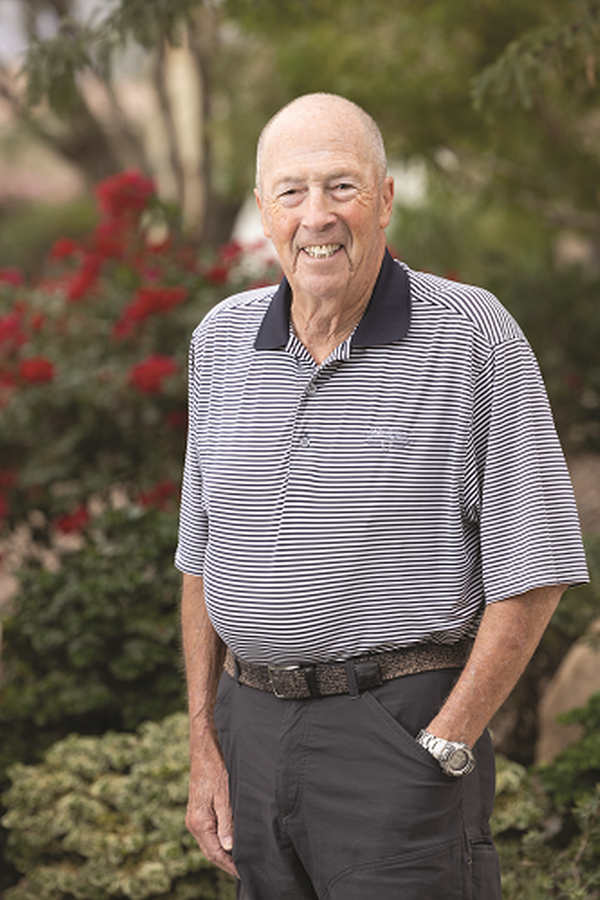
For most of his life, David Moss maintained peak physical condition. He took up running at the age of 40, completing 17 marathons within 12 years before retiring from the sport. However, on April 26, 2023 — three days after celebrating his 86th birthday — Moss awakened during the night and rose from bed. He forgot to remove his CPAP mask, passed out and, despite the mask protecting his face, the bridge of his nose forcefully struck the door jamb. Moss and his wife Susan, quickly headed to Eisenhower Health’s Tennity Emergency Department where he underwent an initial assessment that involved examining for neurological and cardiovascular symptoms. To avoid a wait time in the emergency department, Moss opted to sign himself out with a proviso from clinicians that he seek medical assistance the next day.
“At the time, I was feeling better,” Moss recalls. “The only real pain I had at that point was a sore neck because of the apparent whiplash when my head hit the door jamb.” [MORE]
A visit to his primary care physician yielded no signs or symptoms pointing to a stroke or seizure and Moss felt better. But during an ear irrigation visit in early May, the otolaryngologist observed an indentation on Moss’s head from the CPAP; a further check noted sinus damage. A subsequent CT scan revealed chronic bilateral subdural hematomas. Often the result of a head injury, a subdural hematoma occurs when liquefied blood collects and clots between the brain’s surface and the outer layer, called the dura.
Moss immediately reached out to Eisenhower Board Certified Neurosurgeon Farhad Limonadi, MD, who had successfully treated Moss for a previous acoustic neuroma (a noncancerous tumor on the vestibular nerve in the ear). Dr. Limonadi’s colleague, Alfred Shen, MD, Board Certified in Neurosurgery, admitted Moss to the hospital.
A brain MRI indicated the hematomas were stable and Moss remained asymptomatic. As a result, Dr. Shen put Moss on observation and medication to reduce the risk of stroke or seizure. However, following a brain CT scan two weeks later, Dr. Shen recommended that Moss undergo a middle meningeal artery (MMA) embolization to treat the hematomas.
Board Certified Neurointerventional Radiologist Brian Herman, MD, performed the embolization on May 26, 2023. A minimally invasive procedure, MMA involves inserting a microcatheter through the groin and directing it into the middle meningeal arteries. Employing biplanar imaging, a state-of-the-art medical technology that uses two rotating cameras, Dr. Herman infused small particles through the tubes to block the blood flow, and shrink and eventually eradicate the hematomas.
“The embolization involves reducing the upstream pressure on the vessels that are likely responsible for the hemorrhage, so that the subdural bleeds can heal and hopefully not recur,” says Dr. Herman.
Although stroke and vision loss are risks associated with MMA embolization, complications are less common than traditional interventions and the post-surgical outcome is highly favorable.
“Middle meningeal artery embolization is a progressive, less invasive approach that is becoming more common and it has also been shown to be successful in preventing recurrent subdural hematomas,” explains Dr. Herman. “Because it’s a newer technique, it’s important for people who are diagnosed with subdural hematomas to discuss the procedure with their physician as a potential treatment option,” he adds.
The surgery went smoothly and Moss spent two nights in the hospital recovering before being discharged home.
“Dr. Herman called me on the Monday following surgery to see how I was doing, which I thought was very impressive,” says Moss. “I told him that I felt great.”
Moss notes that he is on the mend overall. Although recovering his physical strength and stamina has taken some time, he’s happy to be playing golf again. The great news is that a series of CT scans since the surgery has shown a decrease in the size of the subdural hematomas.
“At some point, I would love to thank Dr. Herman personally,” he says.
For more information or to contact Eisenhower Neuroscience Institute, call 760.837.8020 or visit EisenhowerHealth.org/Neuro.
FIVE THINGS
...you can do right now as part of your wellness routine.
Purge Your Home Filing Cabinet
Tax season is a good time to clear outdated paperwork and lighten your files. Shred confidential material at home or drop off at a designated city shredding site.Begin Your Day Thoughtfully, Quietly
There’s nothing like beginning the day with a cup of hot tea or coffee, quietly observing the morning sunrise, or writing in your journal.Alternate Evening Shows and Reading
Favorite programs and movies are a wonderful way to unwind — reading is also relaxing. Alternate these activities and set a goal to read more books this year.Berries, Berries, Berries
Enjoy the abundance of springtime berries — low in calories and packed with antioxidants and fiber. Add berries to meals or eat fresh for an evening snack.Schedule Your Annual Mammogram
Get a jump on your health and schedule your annual mammogram. To find a physician, visit EisenhowerHealth.org/Provider, or call 760.568.1234.


