Clinical Trials

Current Clinical Trials

OPEN TO ENROLLMENT: SKYWARD Trans-Carotid IDE Study: Study of the Shockwave Medical SkyRunner Carotid Intravascular Lithotripsy (IVL) System for the Treatment of Calcified Carotid Arteries Prior to Trans-Carotid Stenting
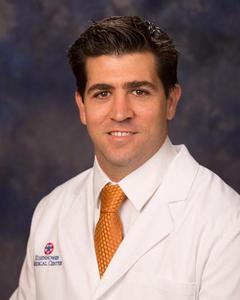
  1. Trevor DerDerian, MD
    Trevor DerDerian, MD
  2. for people 18 and up (full criteria)
  3. Rancho Mirage, CA
  4. study started August 2026
  5. Trevor DerDerian, MD
  6. Accepting new patients

Description

Summary

To assess the safety and effectiveness of the Shockwave Medical SkyRunner Carotid IVL System for the treatment of calcified carotid arteries prior to stenting with commercially available trans-carotid stent systems in patients at high risk for complications from carotid endarterectomy (CEA).

Official Title

OPEN TO ENROLLMENT: SKYWARD Trans-Carotid IDE Study: Study of the Shockwave Medical SkyRunner Carotid Intravascular Lithotripsy (IVL) System for the Treatment of Calcified Carotid Arteries Prior to Trans-Carotid Stenting (SKYWARD Trans-Carotid IDE [Investigational Device Exemption] Study)

Detailed Description

The Shockwave Javelin Coronary IVL Catheter was developed to address the current challenges clinicians face when treating tight, difficult to cross, calcified coronary lesions and was designed as a rapid exchange catheter to deliver intravascular lithotripsy to those complex lesions in the coronary vasculature.The intended benefit of the Shockwave Javelin Coronary IVL Catheter is to allow the catheter to modify calcium in tight, difficult to cross lesions to increase the compliance of the vessel... more
less

The Shockwave Javelin Coronary IVL Catheter was developed to address the current challenges clinicians face when treating tight, difficult to cross, calcified coronary lesions and was designed as a rapid exchange catheter to deliver intravascular lithotripsy to those complex lesions in the coronary vasculature.The intended benefit of the Shockwave Javelin Coronary IVL Catheter is to allow the catheter to modify calcium in tight, difficult to cross lesions to increase the compliance of the vessel and allow further crossing of the device or additional treatment at the discretion of the physician.Up to 158 subjects (150 evaluable) subjects with moderate-to severely calcified, stenotic de novo, coronary artery lesions presenting with stable or following stabilization after acute coronary syndrome (ACS) that are suitable for non-emergent percutaneous coronary intervention (PCI) will be enrolled at up to 35 sites.

Keywords

Coronary Artery Disease (CAD)

Eligibility

for people 18 and up
General Inclusion Criteria:1. Subject is =18 years of age2. Subject is able and willing to comply with all assessments in the study.3. Subjects with native coronary artery disease including stable angina or following stabilization after acute coronary syndromes (ACS) for non-emergent percutaneous coronary intervention (PCI)4. Biomarkers (troponin) must be: 1. less than or equal to the upper limit of lab normal within 24 hours prior to the procedure or may be drawn from the side port of the sheat... more
less

General Inclusion Criteria:1. Subject is =18 years of age2. Subject is able and willing to comply with all assessments in the study.3. Subjects with native coronary artery disease including stable angina or following stabilization after acute coronary syndromes (ACS) for non-emergent percutaneous coronary intervention (PCI)4. Biomarkers (troponin) must be: 1. less than or equal to the upper limit of lab normal within 24 hours prior to the procedure or may be drawn from the side port of the sheath at the time of index if the PCI is a non-emergent procedure and has stable angina (result will not be known prior to procedure); OR 2. if above the upper limit of lab normal, biomarker result must be less than 5 times the upper limit of lab normal within 24 hours prior to the procedure and the following criteria must be met: • The procedure must not be emergent and the subject cannot have angina at rest.5. Left ventricular ejection fraction (LVEF) >30% within 6 months (note: in the case of an event (MI or Revascularization) the LVEF must be taken post-event and in the case of multiple assessments of LVEF, the measurement closest to enrollment will be used for this criterion; may be assessed at time of index procedure).6. Subject, or legally authorized representative, signs a written Informed Consent form to participate in the study, prior to any study-mandated procedures.7. Estimated life expectancy >1 year.8. Lesions in non-target vessels requiring PCI may be treated either: 1. >30 days prior to the study procedure if the procedure was unsuccessful or complicated; OR 2. >24 hours prior to the study procedure if the procedure was successful and uncomplicated (defined as a final lesion angiographic diameter stenosis <30% and TIMI 3 flow (visually assessed) for all non-target lesions and vessels without perforation, cardiac arrest or need for defibrillation or cardioversion or hypotension/heart failure requiring mechanical or intravenous hemodynamic support or intubation, and no evidence of elevated biomarkers post-procedure; OR 3. >30 days after the study procedure Angiographic Inclusion Criteria9. The target lesion must be a de novo coronary lesion that has not been previously treated successfully with any interventional procedure10. Single de novo target lesion stenosis of protected LMCA, or LAD, RCA or LCX (or of their branches)11. The target vessel reference diameter must be =2.5 mm and =4.0 mm12. The target lesion must meet one of the following criteria: 1. Target lesion stenosis >90% up to 40 mm in length and evidence of moderate or severe calcification at the lesion site. Moderate calcification defined as angiography with densities noted only during the cardiac cycle prior to contrast injection; severe calcification defined as angiography with fluoroscopic radio-opacities noted without cardiac motion prior to contrast injection involving both sides of the arterial wall; OR 2. Chronic total occlusion presenting with J-CTO score of 1 with evidence of calcification and occlusion length up to 20 mm.13. Guidewire must be in true lumen, distal to the lesion, and not subintimal, prior to insertion of Shockwave Javelin Coronary IVL catheter (antegrade wire technique only)General Exclusion Criteria:1. Any comorbidity or condition which may prevent compliance with this protocol, including follow-up visits2. Subject is participating in another research study involving an investigational agent including pharmaceutical, biologic, or medical device that has not reached the primary endpoint3. Subject is pregnant or nursing (a negative pregnancy test is required for women of child-bearing potential within 7 days prior to enrollment)4. Unable to tolerate antiplatelet/anticoagulation therapy per society guidelines5. Subject has an allergy to imaging contrast media which cannot be adequately pre-medicated6. Subject experienced an acute STEMI within 30 days prior to index procedure7. New York Heart Association (NYHA) class III or IV heart failure8. Subject has acute or chronic renal disease with eGFR <30 ml/min/1.73m2 (using institutional formula)9. History of a stroke or transient ischemic attack (TIA) within 60 days, or any prior intracranial hemorrhage or permanent neurologic deficit10. Active peptic ulcer or upper gastrointestinal (GI) bleeding within 3 months11. Untreated pre-procedural hemoglobin <10 g/dL or intention to refuse blood transfusions if one should become necessary12. Coagulopathy, including but not limited to platelet count <100,000 or International Normalized ratio (INR) >1.7 (INR is only required in subjects who have taken warfarin within 2 weeks of enrollment)13. Subject has a hypercoagulable disorder such as polycythemia vera, platelet count >750,000 or other disorders14. Subject has an active systemic infection on the day of the index procedure with either fever, leukocytosis or requiring intravenous antibiotics15. Subjects with clinical evidence of cardiogenic shock16. Uncontrolled severe hypertension (systolic BP >180 mm Hg or diastolic BP >110 mm Hg)17. Subjects with an estimated life expectancy of less than 1 year18. Non-coronary interventional or surgical structural heart procedures (e.g., TAVR, MitraClip, LAA or PFO occlusion, etc.) within 30 days prior to the index procedure19. Planned non-coronary interventional or surgical structural heart procedures (e.g., TAVR, MitraClip, LAA or PFO occlusion, etc.) within 30 days after the index procedure20. Subject refusing or not a candidate for emergency coronary artery bypass grafting (CABG) surgery21. Planned use of atherectomy, scoring or cutting balloon, sub-intimal reentry device, or any investigational device other than coronary IVL Angiographic Exclusion Criteria22. Unprotected left main diameter stenosis >30%23. Evidence of a serious angiographic complication in the target vessel prior to treatment with coronary IVL (dissection, perforation, abrupt closure, persistent slow-flow or persistent no reflow)24. Definite or possible thrombus by angiography in the target vessel25. Evidence of aneurysm in target vessel within 10 mm of the target lesion26. Second lesion with >50% stenosis in the same target vessel as the target lesion including its side branches27. Chronic total occlusion of the target lesion, J-CTO =228. Target lesion is located in a native vessel that can only be reached by going through a saphenous vein or arterial bypass graft29. Previous stent within 5 mm of the target lesion30. Failure to successfully cross the guidewire across the target lesion31. Planned use of antegrade dissection and reentry (ADR), retrograde guidewire (RW), or retrograde dissection and reentry (RDR) crossing technique at any time during the procedure.

Lead Scientists at Eisenhower Health

Trevor DerDerian, MD
Trevor DerDerian, MD, is Board Certified in Vascular Surgery with over ten years of experience specializing in minimally invasive and advanced vascular procedures. He has a particular expertise in transcarotid stenting, ranking among the highest-volume surgeons in the United States. Dr. DerDerian is passionate about advancing the field of vascular surgery, lecturing and teaching nationally to physicians and trainees, and leading innovations in minimally invasive techniques for peripheral vascula... more
less

Trevor DerDerian, MD, is Board Certified in Vascular Surgery with over ten years of experience specializing in minimally invasive and advanced vascular procedures. He has a particular expertise in transcarotid stenting, ranking among the highest-volume surgeons in the United States. Dr. DerDerian is passionate about advancing the field of vascular surgery, lecturing and teaching nationally to physicians and trainees, and leading innovations in minimally invasive techniques for peripheral vascular disease.

Dr. DerDerian currently serves as the Chief of Vascular Surgery at Eisenhower Health and treats a wide range of vascular conditions, including aortic aneurysms, peripheral vascular disease, cerebrovascular disease, stroke prevention, venous disease, varicose veins, kidney disease, dialysis access and is dedicated to comprehensive cutting-edge care for the Coachella Valley.

As the Director of the Limb Salvage Program at Eisenhower Health, Dr. DerDerian is dedicated to a multidisciplinary approach with minimally invasive advanced revascularization techniques in preserving limbs and improving patient outcomes. He has published numerous peer-reviewed articles, presented at national conferences and served as principal investigator on a national clinical trial.

Dr. DerDerian grew up in Tarpon Springs, Florida, earned his undergraduate degree at the University of Miami, completed his general surgery training in New York City, and finished his vascular and endovascular fellowship at West Virginia University. For nearly a decade, he has served the local community and was honored with the Citizens Life-Saving Medal by the Riverside County Sheriff’s Office.

He lives in Rancho Mirage with his wife and three sons and enjoys traveling, snowboarding, and playing pickleball.

Co-Investigators

  1. Kush Sharma, MD

Clinical Study Details

  1. Accepting new patients
  2. study started August 2026
  3. Investigational
  4. September 03, 2026
Cookie Disclaimer:

By using or otherwise accessing the website, you agree to that this website uses cookies and similar technologies, including those provided by vendors, for various purposes, such as to support website performance, features, and analytics (for example, Google Analytics). These cookies may process data such as IP addresses, including for them to function properly. Cookie vary across the website, including per webpage. For more information, see the Website Privacy Policy. Use or other access to this website is subject to the Website Terms and Conditions.

Accept ALL cookies to enhance your experience, including analytics that help us understand how our site is used. Accept Required allows only essential cookies needed for the website to function, such as session management and your cookie preferences. Accept None does not allow any non-essential cookies and no cookies are stored after your session is complete. Modify My Preferences