



Programs and Services
Individual and Group Instruction
For those who have a physician referral and meet insurance requirements, the professional staff of the Diabetes Program offers individual or group instruction and activities designed to promote self-management skills in nutrition, blood glucose monitoring, medication administration and other diabetes-related subjects.
Family members are encouraged to support their loved one by attending the sessions. Spanish speaking educators are available.
Community Education
Eisenhower’s Diabetes Education Services offers free classes from October through June in English and Spanish.
Click to download information about:
- Diabetes Education Services
- Diabetes Education Services (in Spanish)
Support Group
Diabetes Support Group for persons on basal/bolus insulin and insulin pump.
Topics Covered in Classes Include:
- Diabetes overview
- Stress and psychological adjustment
- Family involvement and social support
- Nutrition
- Exercise
- Medications
- Relationship between nutrition, exercise, medication, and blood glucose levels
- Monitoring and use of results
- Acute and chronic complications
- Foot, skin and dental care
- Goal setting
- Improving glucose control
- Use of healthcare systems and community resources
Programs Offered
Diabetes Prevention Program (DPP)
If you have been diagnosed with pre diabetes, the Eisenhower Health CDC Recognized Diabetes Prevention Program is your opportunity to take action. You can join the National Diabetes Prevention Program (DPP) if you qualify. Medicare fully covers the DPP. If you have private insurance, check your plan for coverage. The program is based on a curriculum shown to prevent or delay the onset of type 2 diabetes in adults that are at high risk.
About the DPP:
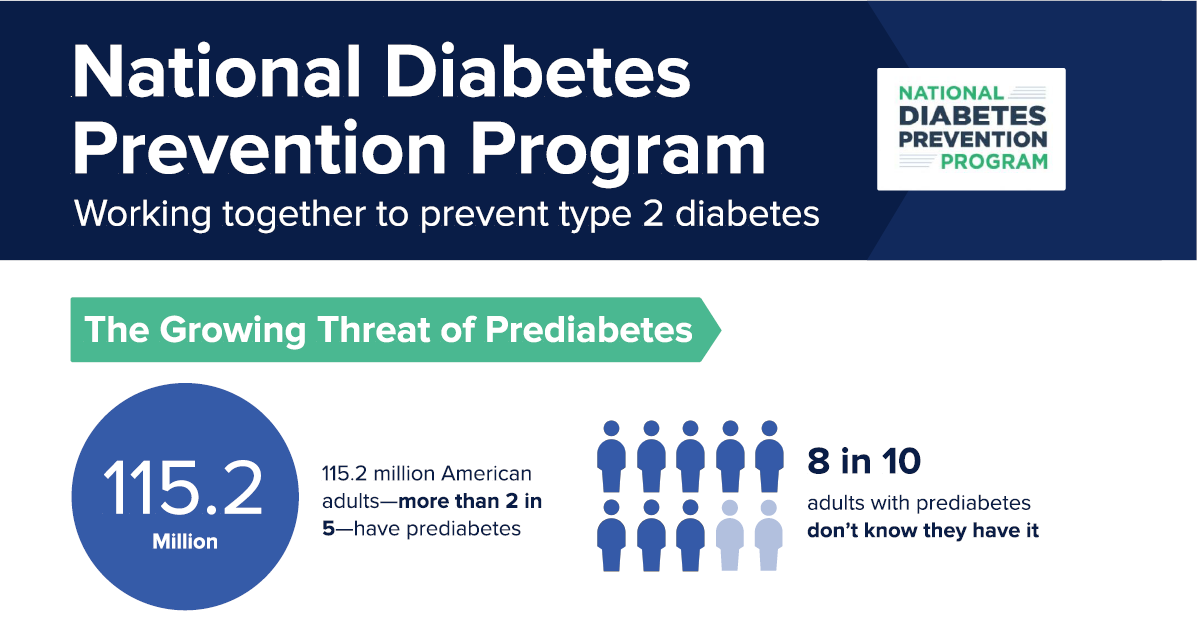
The Eisenhower Diabetes Prevention Program is part of the National Diabetes Prevention Program (https://www.cdc.gov/diabetes-prevention/index.html), led by the Centers for Disease Control and Prevention (CDC). It is proven to help people with prediabetes prevent or delay the development of type 2 diabetes. We also offer an ongoing DPP support group for those who have completed the program.
DPP Highlights:
- Fully recognized by the CDC
- Fully Covered by Medicare
- CDC approved curriculum
- A trained Lifestyle Coach
- Group Support over the course of a year
Take the Prediabetes Risk Assessment test to see if you qualify

DPP Testimonials:

“This life-changing program at Eisenhower Health Center gave me my health, confidence, and future back. Embracing a low-carb lifestyle alongside a deeply supportive community of peers helped me finally lower my A1C, lose weight, and find joy in staying active. If you are facing pre-diabetes, please take this step—it truly transformed my whole outlook on life and saved me.” — Tim D.
“I was glad to be in this program which focused on life style changes with diet and exercise. One of the best parts of the program was being with a cohort of people who were all working on the same goals of losing weight and keeping our A1c in the prediabetes range. The goal was to move down to a normal range and stay there. I would recommend this program for anyone who is concerned about their health and does not want to get diabetes. The rigors of dealing with diabetes care are far greater than the requirements of this program.” — Susan G.
Medical Nutrition Therapy (MNT)
MNT is a personalized, nutrition-based treatment plan. The goal of MNT is to help individuals manage and improve their health through nutrition. This includes food and beverage choices, as well as nutrition support systems such as tube feeding and parenteral nutrition.
While nutrition education and counseling are often part of the treatment plan, MNT includes personalized assessments and recommendations from a Registered Dietitian Nutritionist (RDN) to treat specific health conditions. Anyone can benefit from seeing an RDN, including those with diabetes, heart conditions, food allergies, eating disorders, kidney disease and more.

Is MNT covered by Insurance?
MNT is covered by a variety of insurance plans. Medicare Part B covers medical nutrition therapy for diabetes and kidney disease or if you've had a kidney transplant within the last 36 months. Medicare Advantage (Medicare Part C) plans may offer additional benefits, including coverage beyond the conditions covered by traditional Medicare. Medicare coverage varies from state to state.
If you have private insurance (such as through your employer), check with your insurance plan for specific coverage details. Your plan may cover nutrition services for a wide variety of chronic conditions and health concerns, such as heart disease, diabetes and obesity.
Diabetes Self-Management Education & Support (DSMES)
Our DSMES program gives you the knowledge, skills and support to manage your diabetes. It provides you with the foundation to help you navigate your daily self-care with confidence and is provided by a diabetes care and education specialist.
Diabetes care and support is offered through DSMES programs (also known as diabetes education programs) that can be found in hospital outpatient centers, clinics, physicians’ offices, pharmacies and wellness centers, to name a few. Many of these programs are accredited by ADCES and the ADA, which means the program has met vigorous criteria set by the U.S. Department of Health & Human Services. Although, Eisenhower Diabetes Education Services is the only one accredited in the Coachella Valley.
A Diabetes Care and Education Specialist can help you:
- Understand exactly what diabetes is and how it affects your body
- Discover how diabetes medications work
- Identify what types of food are best for you and how to plan meals that fit your lifestyle, culture, religious beliefs and budget
- Determine the best type of glucose meter or Continuous Glucose Monitoring (CGM) device for you.
- Explore and choose an insulin pump that works best for you
- Find apps and other tools that offer reminders and help you track your progress
- Help you cope with stress and solve problems as they arise
- Interpret data from your diabetes devices to get treatment recommendations
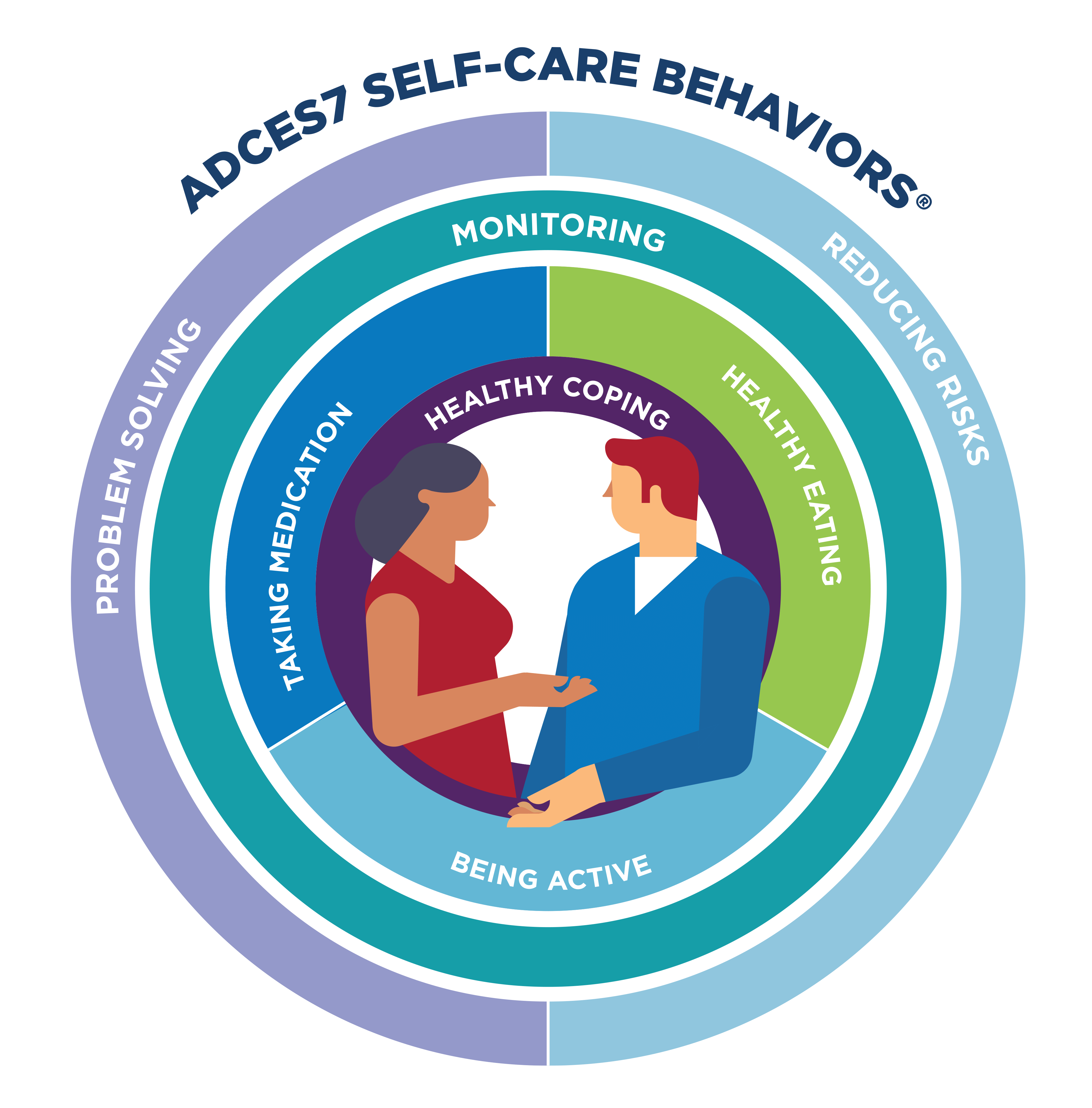 Topics Covered Include:
- Diabetes Overview
- Nutrition
- Adding Physical activity
- Medications
- Monitoring and use of results
- Family and social support
- Stress and coping with diabetes diagnosis
- Preventing Acute & chronic complications
- Foot, skin & dental care
- Goal setting
- Improving glucose control
- Use of healthcare systems & community resources
- Recommended Immunizations for people with diabetes
Diabetes Technology
Insulin Pumps
For people living with diabetes who are tired of injections, an insulin pump can bring welcomed relief. Insulin pumps are small, computerized devices that deliver insulin in two ways
- In a steady measured and continuous dose (the "basal" insulin), or
- As a surge ("bolus") dose, at your direction, around mealtime.
A diabetes pump may be a good choice for:
- People who like the idea of a pump. If this is what you want, or you want it for your child, and it can be used safely, then it should be used.
- Active people, who benefit from changes in basal rates or suspending the pump when exercising.
- People who have frequent low blood glucose reactions.
- Anyone who has delays in absorption of food from the stomach (gastroparesis).
- Women planning pregnancy.
- People who want to use the pump’s bolus calculator functions to determine insulin doses.
It’s a Choice. Schedule a pump demo with one of our CDCES Certified Pump trainers.
Other factors to consider:
- The insulin pump doesn’t take away the need to check blood glucose.
- There are technical aspects to using a pump—setting it up, putting it in, interacting with it—that are more complicated in some ways than using injections.
- If it breaks or falls off, the person wearing it needs to be ready to give insulin by injection any time it is needed.
- It can be expensive, so find out which pumps are covered by your insurance and if those pumps meet your needs.
- All pumps are an extra piece of hardware attached to your body, either with tubing or attached to your skin. There are many clever ways to wear pumps and hide them from view, but they do take a bit of getting used to at first.
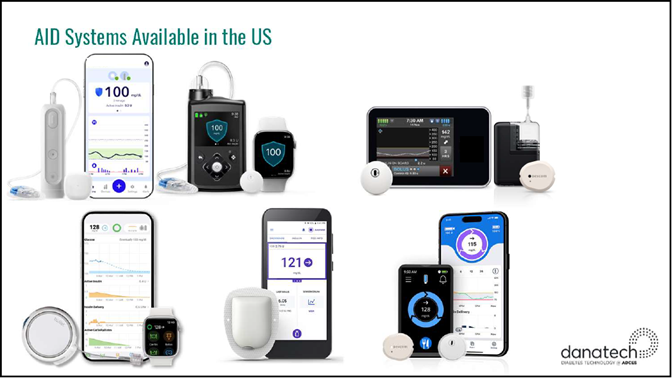
Insulin Pump comparison links:
- ADA: https://consumerguide.diabetes.org/products/insulin-pumps
- ADCES: https://www.adces.org/education/danatech/insulin-pumps/find-and-compare-insulin-pumps
Continuous Glucose Monitors (CGM)
A Continuous Glucose Monitor (CGM) is a wearable device that tracks your blood sugar (glucose) levels 24/7. It works by inserting a tiny sensor under the skin to measure the fluid between your cells, automatically sending minute-by-minute readings to your smartphone or a dedicated reader.
CGM Setup & Training
CGM Comparisons


