


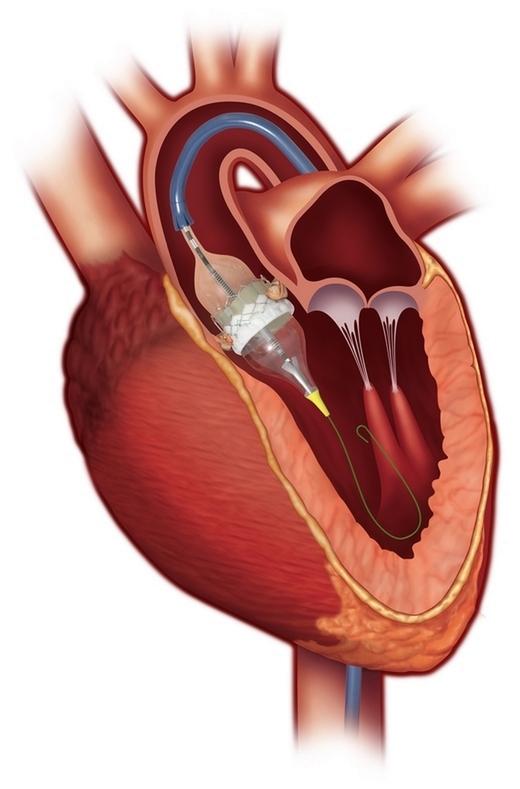
The standard treatment for aortic stenosis (a narrowing of the aortic valve opening) has been valve replacement through open-heart surgery. In 2015, Eisenhower Health became the first and only hospital in the Coachella Valley to approach aortic stenosis with TAVR.
TAVR is a minimally invasive procedure that replaces a faulty valve without surgically opening the chest. With the TAVR approach, a team of interventional cardiologists and cardiac surgeons delivers a collapsible replacement valve to the valve site through a catheter. Once in position, the new valve is expanded, pushing the old valve leaflets (the “flaps” that control blood flow) out of the way and creating a new valve orifice.
Since 2015, Eisenhower Health has performed more than 500 TAVR procedures and now, designated as an Edwards Benchmark program, the hospital will be a training site for other health care facilities across the globe.
“Eisenhower Health is a cardiovascular center of excellence,” says Scott Strech, RN, BSN MBA, Chief Administrative Officer/Administrator, Cardiovascular Services, Eisenhower Health. “To have completed the Edwards Benchmark program underscores our commitment to providing the best cardiovascular care to our community. It takes a multidisciplinary team effort that embraces technology and works together to achieve the best outcomes for our patients.
According to Edwards, the Benchmark program is designed to educate the multidisciplinary heart team and improve the patient clinical pathway which translates to shorter patient stays and reduced procedure times.


By using or otherwise accessing the website, you agree to that this website uses cookies and similar technologies, including those provided by vendors, for various purposes, such as to support website performance, features, and analytics (for example, Google Analytics). These cookies may process data such as IP addresses, including for them to function properly. Cookie vary across the website, including per webpage. For more information, see the Website Privacy Policy. Use or other access to this website is subject to the Website Terms and Conditions.
Accept ALL cookies to enhance your experience, including analytics that help us understand how our site is used. Accept Required allows only essential cookies needed for the website to function, such as session management and your cookie preferences. Accept None does not allow any non-essential cookies and no cookies are stored after your session is complete. Modify My Preferences