


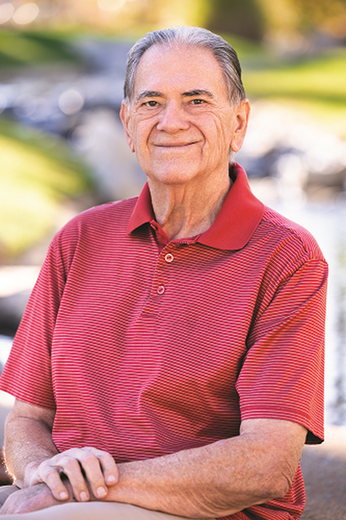
“When I got out of the service at age 24, I had hoped to play golf at the professional level. However, I discovered I had osteoarthritis and could not practice and play enough, without pain, to compete at a professional level,” says McCormick. “To my good fortune, a very good friend named E.B. Johnston — the Pie Man from Johnston’s frozen pies — who was involved in the thoroughbred horse industry, got me started working with horses. Eventually I became a horse trainer. It was a pretty exciting career for about 10 years. I went to work in the aerospace industry after that.”
More recently, in 2020, McCormick beat the odds without setting foot at the racetrack. Suffering from atrial fibrillation — an irregular and often very rapid heart rhythm that can lead to blood clots in the heart — he was admitted to Eisenhower. During a span of seven days, McCormick went into cardiac arrest three times, and each time was revived. His treatment included a pace maker and defibrillator. He was sent home to recover but returned to the hospital with congestive heart failure and a bacterial blood infection.
“I don’t remember anything about my initial time in the hospital,” explains McCormick. “Once they discovered my bacterial blood infection, I was treated with antibiotics for three months. I lost a lot of weight during that time getting rid of the fluid build-up in my body.”
Once he’d recovered from his infection, McCormick needed bladder surgery. While recovering at home following a successful bladder surgery, Anna found him on the floor of their home one evening and called for an ambulance.
McCormick had suffered a stroke.
“Strokes are caused when a clot stops or slows down blood flow to the brain,” says Eisenhower Board Certified Interventional Radiologist Mehran Elly, MD. “As in Mr. McCormick’s case, following a CT Angiogram and CT perfusion, we were able to see where the blood flow had stopped and what part of the brain was affected.”
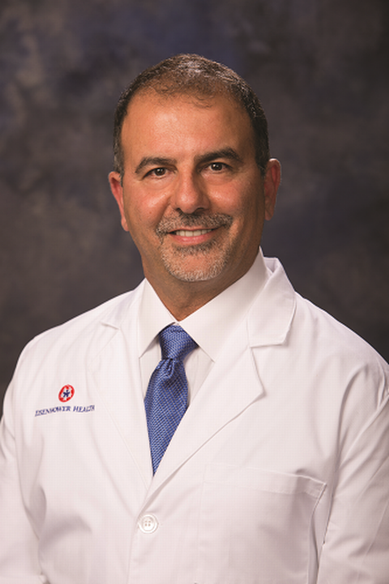
McCormick was quickly taken to the angiography suite. Using a catheter inserted into an opening in the groin, a clot removal device was routed under fluoroscopy up to the blocked vessel in the brain. The blood clot was captured and removed, restoring blood flow.
“Mr. McCormick’s symptoms rapidly improved,” says Dr Elly. “We were fortunate to be able to save the affected part of his brain.”
“The day after my stroke, I felt like nothing had happened,” says McCormick. “I felt just fine. I was still weak from my heart surgeries but that has gotten progressively better. I don’t feel like I have any side effects from the stroke.”
“With my pacemaker and defibrillator, I haven’t had any more atrial fibrillation issues. I can really tell the difference. I’ve been told that my heart capacity is working at about 75 percent of what it used to be and I’m much weaker, but overall, things are going pretty well.”


By using or otherwise accessing the website, you agree to that this website uses cookies and similar technologies, including those provided by vendors, for various purposes, such as to support website performance, features, and analytics (for example, Google Analytics). These cookies may process data such as IP addresses, including for them to function properly. Cookie vary across the website, including per webpage. For more information, see the Website Privacy Policy. Use or other access to this website is subject to the Website Terms and Conditions.
Accept ALL cookies to enhance your experience, including analytics that help us understand how our site is used. Accept Required allows only essential cookies needed for the website to function, such as session management and your cookie preferences. Accept None does not allow any non-essential cookies and no cookies are stored after your session is complete. Modify My Preferences